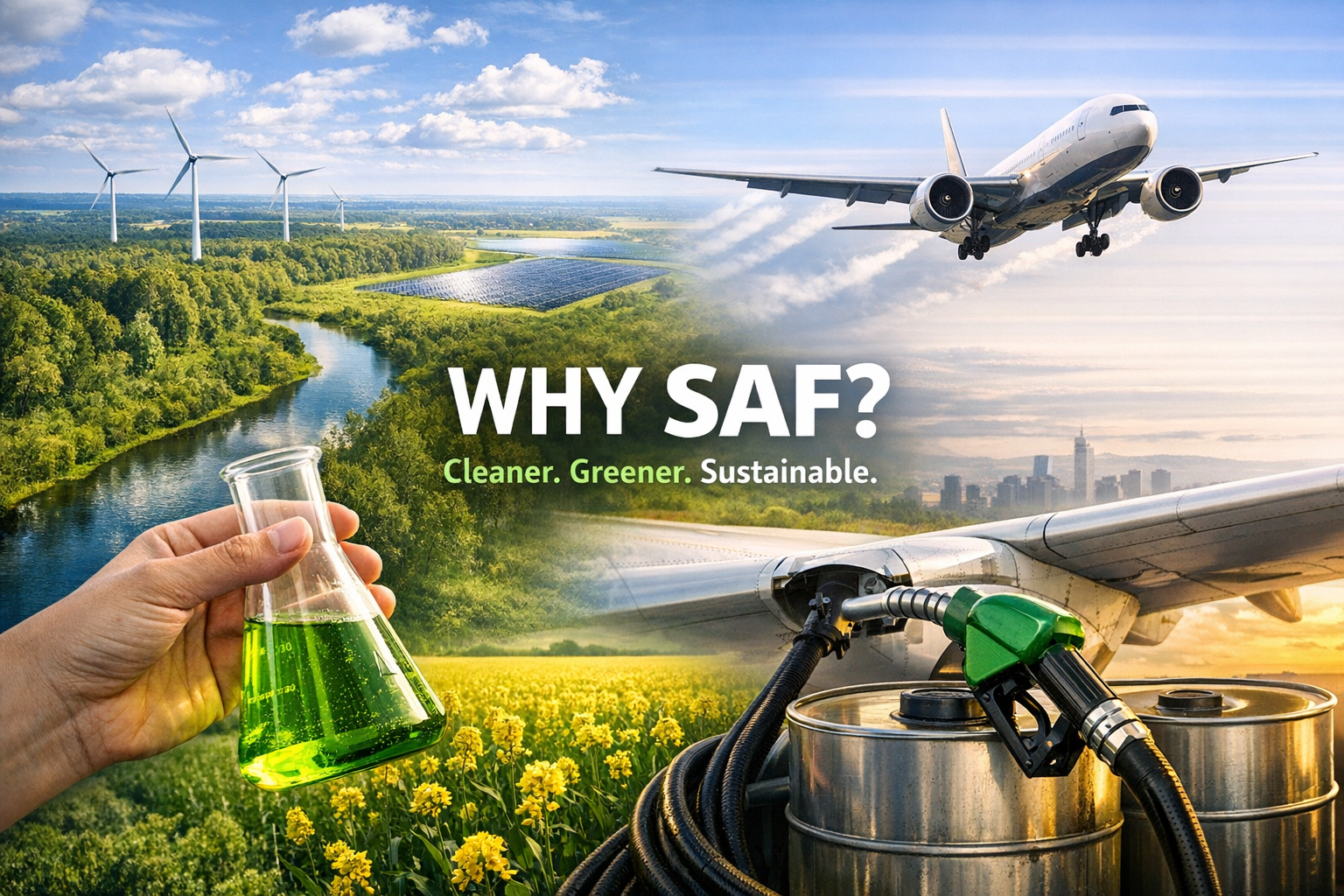
The only fuel that can decarbonize aviation
-
Aviation can't electrify or go hydrogen at scale for decades. SAF is a true drop-in replacement — same infrastructure, no aircraft modification, works today. It's not one option among many; it's the only one.
-
193 ICAO member states committed to net zero by 2050. EU mandates 2% SAF now rising to 63% by 2050. UK, Singapore, Japan, China all have binding blending targets. This isn't voluntary — it's law.
-
Production has doubled year-on-year since 2022 yet still covers only 0.6% of jet fuel demand. IATA projects 400m tonnes needed by 2050. The gap between supply and mandate is the opportunity.
-
SAF delivers up to 80% fewer lifecycle emissions versus fossil jet fuel. IATA confirms it as the single largest decarbonisation lever — expected to deliver the majority of aviation's carbon reduction through 2050.
-
The total investment needed to build SAF production facilities through 2050. Annual financing needs scale from $1bn today to $744bn by 2050. Private markets must carry the majority of this load.
-
Lufthansa, Delta, United, IAG, DHL, FedEx — all with formal SAF procurement targets. In 2022 every single drop of SAF produced was purchased, despite costing 2–5x conventional jet fuel.